How to set up lighting correctly under conditions of high humidity and
constantly bright natural light — choosing bulbs, managing shadows, and
zoning by scenario in Singapore homes.
Singapore sits just one degree north of the equator. The sun rises around
7 am and sets near 7 pm — every day of the year — flooding homes with
intense, high-angle light. Pairing that with humidity averaging 84%
creates specific problems that temperate-climate lighting guides simply
don't address.
Problem 01
Glare & Overexposure
Large west- and south-facing windows create glare that makes screens
unreadable and rooms feel uncomfortably bright in the afternoon. Many
residents default to blocking light entirely — but this trades one
problem for another.
Problem 02
Humidity & Fixture Longevity
Constant humidity accelerates corrosion in lamp fittings, causes sockets
to discolour and can degrade wiring insulation faster than in dry
climates. IP-rated fixtures and sealed driver boxes are not optional
luxuries — they extend fixture life significantly.
Problem 03
Energy Load vs. Comfort
Air conditioning already accounts for a large share of a Singapore
household electricity bill. Over-lit rooms require more cooling because
incandescent and halogen bulbs generate heat. Choosing the right light
source reduces both the lighting bill and the cooling load simultaneously.
Bulb Selection
Choosing the Right Bulb
The bulb market in Singapore spans everything from legacy fluorescent
tubes still found in older HDB flats to the latest smart LED systems.
Here is what you need to know about each type.
LED — The Clear Recommendation
LED (light-emitting diode) bulbs have become the dominant choice in
Singapore residential spaces for good reason. They consume 75–80% less
energy than incandescent equivalents, produce far less heat, and last
between 15,000 and 25,000 hours under normal conditions. In a tropical
climate, reduced heat output matters — a single LED replacing a 60W
incandescent can meaningfully reduce the cooling load in a small room.
Energy-saving LED light bulb. Source: Wikimedia Commons (CC BY-SA 4.0)
Colour temperature matters in the tropics.
Warm white (2700–3000K) creates a relaxed, residential feel — good for
bedrooms and living areas. Cool white or daylight (5000–6500K) is common
in kitchens and work areas but can feel harsh when combined with intense
natural light streaming through windows. Consider 4000K (neutral white)
as a versatile middle ground for HDB flats with limited shade control.
Key LED criteria for Singapore conditions
IP44 or higher rating for bathrooms and areas near windows exposed to rain
Sealed driver compartment — open drivers corrode faster in humid air
CRI (Colour Rendering Index) of 80+ for true colour perception in living spaces
Dimmable variants if you plan to install dimmer switches for scenario control
Heatsink material: aluminium dissipates heat better than plastic in warm climates
Fluorescent — Still Present, Gradually Fading
Fluorescent tubes — including compact fluorescent lamps (CFLs) — remain
common in Singapore, particularly in older HDB kitchen and utility areas.
They are more efficient than incandescent but less efficient than LEDs,
and they contain mercury which complicates disposal. Many residents replace
fluorescent fittings with LED tube retrofits during renovations, often
without rewiring.
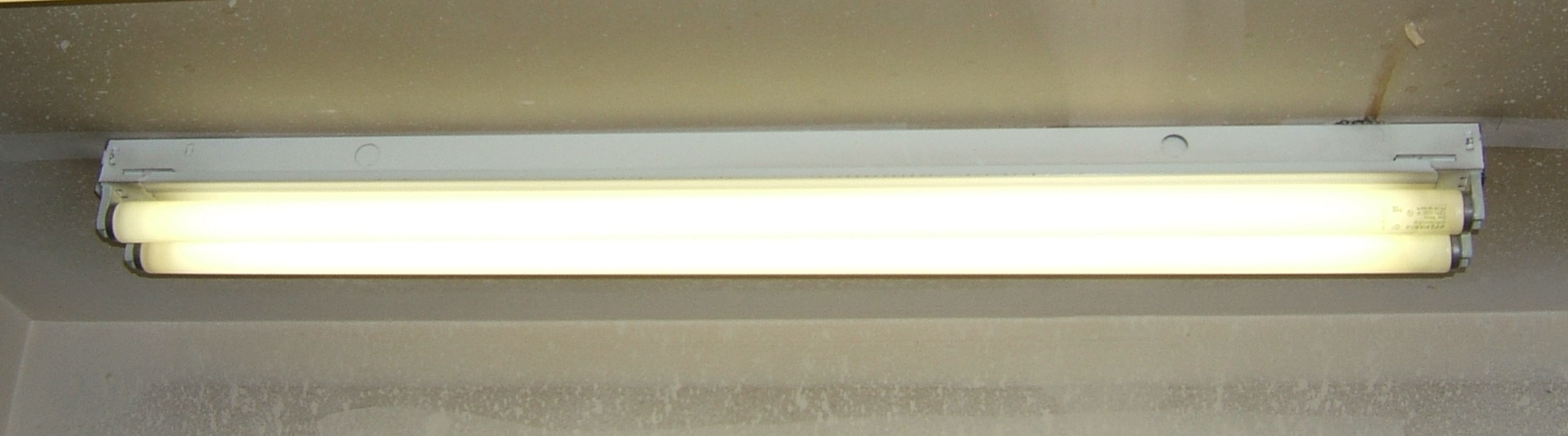
Fluorescent tube strip — a legacy fitting still found in many HDB units. Source: Wikimedia Commons (CC0)
Fluorescent considerations
T8 tubes can be directly replaced with LED T8 retrofits (check ballast compatibility)
Flickering is more pronounced with age in humid environments — replace proactively
Colour rendering is lower than LED at equivalent colour temperatures
Not suitable for dimmable circuits without specialist dimmable fluorescent ballasts
Avoiding Incandescent and Halogen
Incandescent bulbs are no longer sold widely in Singapore. Halogen
spotlights are still occasionally found in landed properties and condo
showrooms. Both run hot — a significant drawback in a climate where
reducing heat generation reduces air conditioning costs. If halogen
downlights remain in a rented unit, consider requesting LED retrofits from
the landlord or using bulbs with lower wattage equivalents.
Room-by-Room
Zoning Lighting by Scenario
Effective home lighting in Singapore is not about maximum brightness — it
is about having the right light for each activity at any time of day. This
requires zoning: different circuits or smart groups for different purposes.
Zone 01
Living Room
The living room serves multiple functions: relaxation, entertainment,
socialising, and sometimes work. A single ceiling fitting is rarely
sufficient. Recommended approach: ambient ceiling light (LED panel or
downlights at 300–400 lux), supplemented by floor or table lamps for
reading zones (500+ lux at surface), and optionally LED strip backlighting
behind the TV to reduce contrast fatigue.
Colour temperature: 2700–3500K for evening relaxation;
neutral 4000K if natural light is well-controlled.
Zone 02
Kitchen
Task lighting is critical here. Under-cabinet LED strips positioned
toward the work surface eliminate shadows cast by the cook's body standing
at the counter. Ensure IP44-rated fittings near the sink. A ceiling-mounted
LED panel (5000–6500K) provides general ambient light; a dimmer on the
dining area circuit allows mood adjustment for meals.
Watch for: moisture accumulation inside fitting housings
near extractor vents — clean and inspect annually.
Zone 03
Bedroom
Bedrooms in Singapore often receive strong morning light. Blackout or
thick curtains are standard, which means the artificial lighting scheme
matters more once curtains are drawn. Avoid installing cool-white ceiling
lights if you use the room in the evenings — they suppress melatonin
and disrupt sleep. Warm white (2700K) bedside table lamps with dimmer
switches are the evidence-based choice.
Smart option: tunable white bulbs that shift from 6500K
in the morning to 2700K at night can be set automatically via a home
automation schedule.
Zone 04
Home Office
Glare on monitor screens is a persistent issue in Singapore apartments with
east- or west-facing windows. Position the desk perpendicular to the
window rather than facing it. Use a dedicated desk lamp with a diffused
head (800–1000 lux at desk surface) and set the ambient ceiling light to
roughly half the desk level to reduce the contrast ratio between screen
and surroundings. Recommended colour temperature: 4000–5000K for
sustained daytime focus.
Zone 05
Bathroom
Moisture resistance is non-negotiable. Choose fittings rated IP44 minimum
for zones 1–2 (within 60cm of a shower or bath). LED downlights with
sealed, glass-faced enclosures perform well. Vanity mirror lighting placed
at face level on both sides (rather than overhead) eliminates unflattering
shadows on the face and improves grooming visibility. Colour temperature:
3000–4000K.
Zone 06
Balcony & Corridor
Outdoor and semi-outdoor areas in Singapore require IP65 or higher.
LED wall lanterns or ceiling-mounted oyster lights with IP65 enclosures
handle rain splash, insects, and humidity. Consider motion-activated
switches for corridors — they extend lamp life and reduce electricity
use. For balconies: warm white (2700–3000K) weatherproof string lights
or directional wall fittings are both practical and visually appealing.
Natural Light
Managing Shadows and Daylight
In Singapore, the challenge is rarely too little light. It is light
arriving at the wrong angle, at the wrong time, or without adequate
diffusion. Controlling natural light is as important as choosing the
right artificial fixtures.
Window Treatments
Day-night roller blinds — two-layer systems with a blockout layer and a
diffusing sheer layer — are among the most practical solutions. They allow
residents to diffuse glare without blocking light entirely during the day,
then switch to full blackout for sleeping. Linen and semi-sheer curtains
soften and warm incoming light without blocking the breeze entirely —
relevant in units that rely on cross-ventilation.
Reflectance and Room Colour
Light wall colours (off-white, pale grey, warm beige) reflect more light
and reduce the need for artificial lighting during the day. Dark feature
walls in north-facing rooms that receive less direct sun can make a space
feel significantly darker. Be deliberate: dark walls work in south-facing
rooms flooded with light; they work against you in north-facing bedrooms.
Mirror Placement
Strategically placed mirrors opposite or adjacent to windows can bounce
daylight deeper into a room. This is particularly useful in long, narrow
HDB units where the back bedroom receives very little natural light. A
full-length mirror on the wall opposite the bedroom window extends the
perceived depth of the space and improves daytime illumination without
any electricity consumption.
Observed practice among Singapore residents:
Many households leave internal doors open throughout the day to allow
light from the main living area to flow into darker rooms. In HDB flats
with standard single-aspect orientations, this simple habit can halve
daytime artificial lighting use in secondary rooms.
Practical Guide
10 Actionable Lighting Tips for Singapore Homes
Specific steps that can be implemented in most HDB flats and condominiums
without structural changes.
01
Replace all remaining fluorescent tubes with LED
Retrofit LED T8 tubes are widely available in Singapore hardware stores. Payback time through reduced electricity bills is typically under 18 months.
02
Install dimmers on living room and bedroom circuits
Ensure the LED bulbs are rated "dimmable" — not all are. Dimmers reduce energy use and allow mood adjustment for different activities.
03
Check IP ratings before buying bathroom fixtures
IP44 minimum for zone 2 (within 60cm of water), IP65 for zone 1 (directly above or in shower). Non-rated fittings corrode rapidly.
04
Add under-cabinet LED strips to the kitchen
This single addition eliminates counter-top shadows and makes food preparation significantly safer. Plug-in strips require no rewiring.
05
Switch to warm white in all bedrooms
2700–3000K bulbs in the bedroom reduce cortisol stimulation at night and support better sleep quality — particularly relevant given Singapore's consistently bright evenings outdoors.
06
Reposition desk perpendicular to the window
This eliminates direct glare on the monitor screen and reduces eye strain during video calls, which are common in remote-working setups.
07
Use sheer curtains for daytime diffusion
Sheer or linen curtains soften direct sun without blocking light, reducing the need to turn on ceiling lights during the day.
08
Install a motion sensor in the corridor or toilet
Rooms visited briefly but frequently — corridors, guest toilets — are ideal candidates for motion-controlled lighting. Immediate energy saving with zero lifestyle change required.
09
Annual inspection of outdoor and balcony fittings
Check for corrosion at terminal connections, condensation inside sealed housings, and discolouration of diffuser panels. Singapore's monsoon seasons accelerate weathering.
10
Consider smart lighting for long-term control
Smart bulbs (Zigbee or Wi-Fi) allow scheduling, colour temperature shifts by time of day, and remote off — useful for households that leave lights on accidentally when leaving for work.
Have a specific lighting question?
NorleyHome covers practical home topics for Singapore residents. Browse
the full range of guides or reach out directly.
NorleyHome is an independent information resource focused on practical
home topics for residents of Singapore. The site covers decisions that
matter in daily life — choosing equipment, organising spaces, understanding
local regulations, and navigating the realities of living in a high-density
tropical city.
Content is produced and reviewed with reference to publicly available
technical standards, local regulatory guidance, and observations from
residents across HDB estates and private condominiums. NorleyHome does
not represent any brand, retailer, or service provider.